
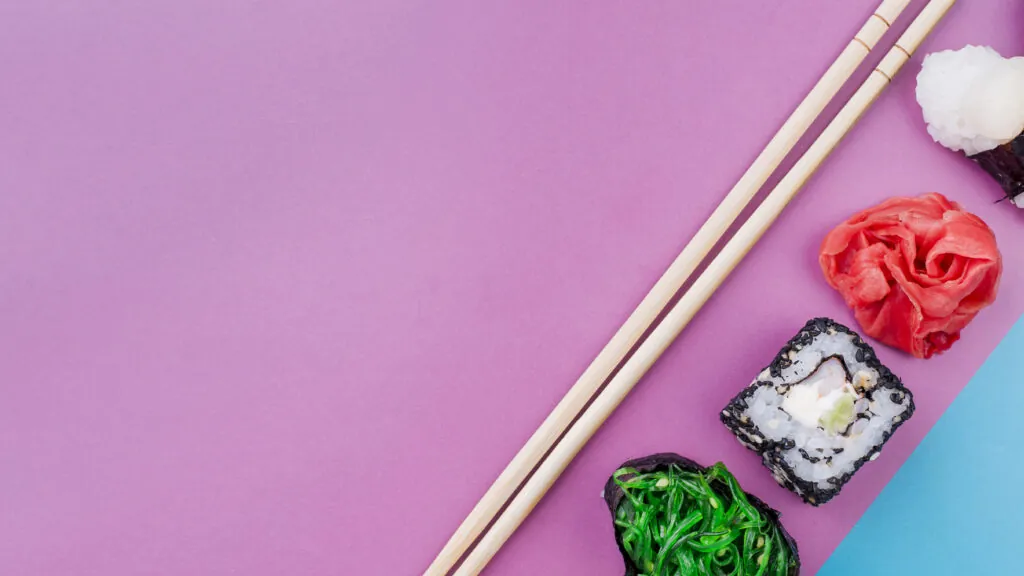
Choosing the right sushi packaging is an essential decision for any Japanese restaurant, sushi bar, dark kitchen, takeaway business or delivery service. Sushi is a delicate product: it combines rice, fish, nori seaweed, vegetables, sauces and toppings that must reach the customer with good texture, order and presentation.
That is why packaging is not just used for transport. It also influences product preservation, the image of the business and the customer’s final experience. Suitable packaging helps keep the pieces in place, prevents movement during delivery, protects against moisture and allows sushi to be presented in a clean, attractive and professional way.
In take away and delivery services, where the customer does not eat the product on site, packaging becomes a key part of the experience. It is the first thing they see when they receive the order and can make the difference between a carefully presented delivery and a less satisfactory one.
How to package sushi correctly
For sushi boxes to perform its function properly, it is important to use it correctly from the moment of preparation. Choosing an attractive tray is not enough: the pieces must also be placed correctly, moisture must be controlled and the packaging must be properly closed to ensure safe transport.
1. Order and placement of sushi pieces
Sushi should be arranged neatly, leaving just enough space between the pieces so they do not get crushed or move during transport. Makis, uramakis and nigiris should be well aligned, with the most visual part facing upwards to improve presentation.
For combos or assortments, it is advisable to organise the pieces by type or flavour. This helps the customer identify each variety more easily and gives a greater sense of care in preparation. It is also best to avoid overfilling the packaging, as an overloaded tray can deform the pieces or affect the presentation.
2. Separation of ingredients and moisture control
Sushi requires the right balance between freshness and moisture control. Ingredients such as rice, nori seaweed, fish or vegetables can change texture if the packaging does not allow proper preservation.
Whenever possible, sauces should be served in separate sauce cups to prevent them from moistening the pieces before consumption. The same applies to accompaniments such as wasabi or ginger, which are best served separately so the customer can use them according to preference.
It is also important to avoid excessive condensation, especially in hot orders or preparations that combine warm and cold ingredients. Choosing packaging suited to the type of product helps maintain the texture and quality of the sushi until it is consumed.
3. Packaging closure and transport safety
The closure of the packaging is another essential aspect. Good sushi packaging should remain closed throughout the journey, preventing accidental openings, spills or internal movement.
For delivery, it is advisable to choose packaging with a well-fitted lid or secure closure systems. For larger orders, such as family trays or combos, the packaging should provide enough stability to withstand transport without deforming.
The security of the closure also influences the customer’s perception. A well-protected order conveys cleanliness, professionalism and trust.

Types and formats of sushi packaging
There are different types of sushi packaging, and the choice will depend on the sales format, the number of pieces and the type of service. Preparing an individual takeaway portion is not the same as preparing a family assortment to share.
Packaging for nigiri, maki and uramaki
Small or medium packaging is ideal for portions of nigiri, maki or uramaki. It allows the pieces to be presented neatly and is very practical for individual menus, promotions or quick orders.
In these cases, it is important for the packaging to have enough height so the pieces are not crushed, and for the base to be stable so they remain properly positioned. Formats with a transparent lid or window can help display the product without needing to open the packaging.
Sushi trays for combos and assortments
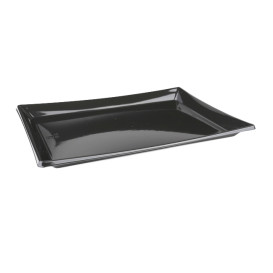
Sushi trays are a very common option for combos, tasting menus and varied assortments. They usually have a larger surface area and allow different types of sushi to be distributed in the same package.
They are especially useful for restaurants offering set menus, sharing trays or special packs for delivery. They also make it possible to create a more complete visual presentation by combining colours, shapes and varieties of pieces.
Individual and family sushi packaging
Individual formats are perfect for personal portions, office menus, quick meals or orders for one person. They are easy to transport, take up less space and speed up preparation.
Family or larger-capacity formats, on the other hand, are designed for shared orders, celebrations, group dinners or special menus. In these cases, it is essential to choose resistant packaging with a good base and secure closure.
Styles of sushi packaging
In addition to size, it is also important to consider the style of the packaging. Shape, design and material directly influence the presentation of the sushi and the image conveyed by the business.
- Square and rectangular shapes
Rectangular packaging is the most common for sushi, as it allows the pieces to be arranged in neat lines and makes better use of space. It is very practical for makis, uramakis, nigiris and combined trays.
Square packaging is also a good option for more compact presentations, individual portions or special formats. It can provide a different image and make storage or stacking easier.
- Window design, lids and premium trays
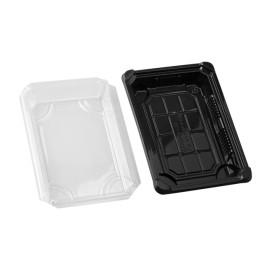
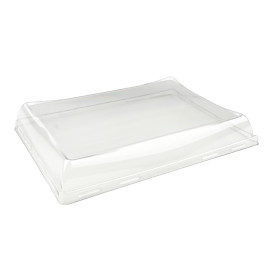
Packaging with a transparent lid or window allows the inside to be seen without opening the package. This improves presentation in display cabinets, counters and orders prepared in advance, as the customer can quickly see the product.
Trays with a full lid offer greater protection and are very useful for delivery. Premium packaging, with refined finishes or decorative designs, helps reinforce the restaurant’s image and is ideal for special menus, gourmet sushi or higher value-added services.
- Materials: bamboo, kraft cardboard and RPET
The material of the packaging should also be chosen according to the type of service and the image of the business.
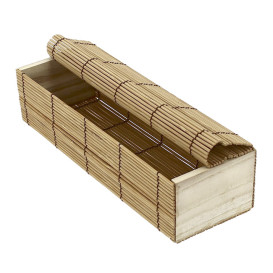
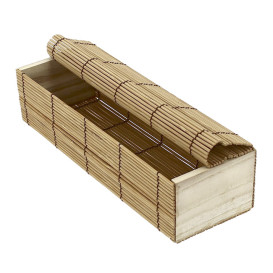
Bamboo packaging provides a natural and refined aesthetic, very much in line with Japanese cuisine concepts, fresh products and premium presentation.
Kraft cardboard is a practical and visually attractive option, with a natural, modern and more responsible image. It works very well for take away and delivery businesses looking for a contemporary presentation.
RPET is a transparent, resistant and lightweight material, ideal when the product needs to be clearly displayed. It is widely used in trays with lids or packaging where sushi visibility is important.


Accessories that complete sushi packaging
A good sushi service does not end with the tray. Accessories are essential to complete the customer experience and make it easier to consume the product anywhere.
- Sauce cups
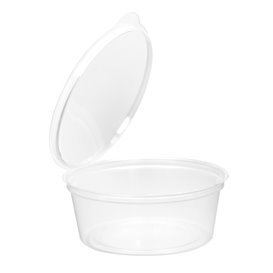
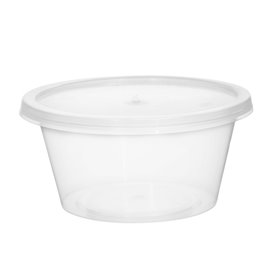
Sauce cups are essential for serving soy sauce, teriyaki sauce, spicy sauce or other liquid accompaniments. They help prevent spills and allow the customer to add the sauce at the moment of consumption.
Serving the sauce separately also helps preserve the texture of the rice and nori seaweed, preventing the pieces from becoming moist during transport.
- Packaging for wasabi and ginger
Wasabi and pickled ginger are part of the traditional sushi experience. Presenting them in small containers or separate compartments improves hygiene, avoids mixing flavours and allows the customer to use them according to preference.
This detail conveys a more complete and carefully prepared service, especially in delivery or take away orders.
- Chopsticks, napkins and other accessories
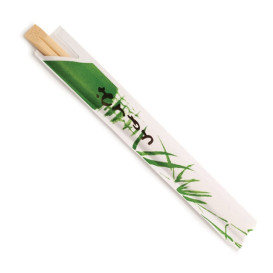
Chopstick sets, napkins and other accessories are essential so the customer can enjoy the order comfortably outside the restaurant. For office orders, picnics, events or delivery, these accessories make a big difference.
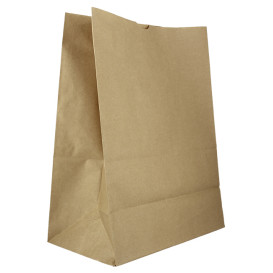
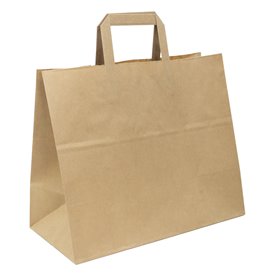
Sauce sachets, transport bags or presentation elements can also be added to help reinforce the restaurant’s image.


How to choose the most suitable sushi packaging
Choosing the right packaging for sushi depends on the type of pieces you prepare, your order volume and your business sales channel. You will not need the same format for an individual portion of makis as for a family tray, a tasting combo or a delivery order.
If your priority is to display the product, packaging with a transparent lid or window can help improve presentation. If you are looking for a more natural or premium image, materials such as kraft cardboard or bamboo can add value. And if you work heavily with delivery, it is best to prioritise resistant, stackable formats with a good closure.
In the end, good packaging does not only protect the sushi: it also helps present your preparations better, makes transport easier and improves the customer experience from the moment the order is received until it is consumed.
At Monouso, you will find different formats of sushi packaging and accessories to complete your take away and delivery service.
Discover our range of sushi packaging and choose the format that best suits your business.
Frequently asked questions about sushi packaging
What is the best packaging for sushi delivery?
For delivery, it is advisable to choose resistant packaging with a secure lid and good stability. This prevents the pieces from moving during transport and helps maintain a neat presentation when the order reaches the customer.
Is it better to use packaging with a transparent lid?
Packaging with a transparent lid or window is a good option when you want to display the product without opening the package. It improves presentation and is very useful in display cabinets, counters and prepared orders.
What size sushi packaging should I choose?
The size of the packaging will depend on the number of pieces and the type of presentation you want to offer. For individual portions, it is best to use small or medium formats that keep the pieces well secured. For combos, tasting menus or sharing orders, larger trays are a better option, as they allow sushi to be arranged neatly and visually attractively.