In this article, we’ll talk about the usefulness of take-away bags for safely transporting your products, especially food items. Whether you deliver orders via a courier service or customers collect them in person, it’s essential to prevent liquids from spilling or food from losing its shape.
Delivery staff also need to transport orders with the confidence that everything will arrive in perfect condition. A bag with an expandable base allows boxes—such as lunch boxes and American-style containers—to fit snugly without deformation.
A new necessity for modern delivery
Take-away bags are a smart way to deliver your food orders. Why? Because they are durable, eco-friendly, and their wide base fits perfectly with the dimensions of American boxes and lunch boxes.
Their gusseted structure—the fold that expands to add extra width—offers stability and helps prevent spills. These are small bags designed for individual orders, but with enough capacity to adapt to a variety of products.
A wide, sturdy base is also a big help for delivery drivers, as it ensures the contents remain intact and presentable. And if customers collect their orders themselves, they’ll also appreciate avoiding accidents that might damage their car or clothes.
What are the best materials for this type of bag?
Take-away bags should be made from materials that are safe for food contact, resistant to both weight and moisture, and biodegradable. In this regard, the most recommended materials are kraft paper and cardboard, as well as traditional or laminated white paper.
Whether you use kraft paper or traditional white paper, the important thing is to choose the most suitable material for the contents. Transporting a fully loaded hamburger with sauces is not the same as delivering a delicate dessert, for example.
Laminated, silicon-coated, or waxed paper is more resistant to moisture and high temperatures. However, some orders can be transported without any issue in a traditional white paper bag—for example, light, dry, or plastic-wrapped items stored at room temperature.
Kraft paper bags
What are the advantages of take-away bags made from kraft paper or cardboard? They are eco-friendly, durable, and ideal for carrying hot food. This material is made from wood pulp, making it biodegradable.
Kraft bags are available in natural (sand) colour, bleached, recycled, or even silicon-coated versions. The choice between them depends on the weight, temperature, and type of food they will carry.
The most resistant kraft paper for wrapping or transporting greasy or moist foods is the kind coated with a layer of paraffin or silicone. This type also has an attractive glossy finish. If the bag has handles, even better—elegant and convenient.
White or laminated paper
As mentioned, kraft paper can be bleached, paraffin-coated, or silicon-coated, which gives it two features once reserved only for traditional white paper: elegance and easy customisation.
However, traditional white paper can also be used to make take-away bags. It all depends on the paper’s weight (grammage) and the type of product it will contain. Generally, it’s better suited for lighter products.
A traditional paper bag can hold products already wrapped in plastic and not prone to leakage. For example: dried fruits, biscuits, or bottled drinks at room temperature—products that could easily be seen as part of a premium branding experience.

Which businesses benefit from these bags?
Take-away bags can benefit any type of business, but especially those that sell food and beverages. These bags offer your customers convenience and ensure stability for the contents.
If you frequently deliver your orders in American-style boxes or lunch boxes, take-away bags are ideal for these types of containers. Today, many businesses offer takeaway or home delivery services, including:
- Restaurants and cafés. In these establishments, offering delivery or food-to-go has become standard practice.
- Dark kitchens. These are businesses that prepare food for takeaway only, without a physical space for on-site dining. Customers simply collect their orders.
- Burger joints and similar outlets that place food in American-style boxes. These meals are served hot and often include sauces and sides, so it’s crucial that the box stays upright to prevent spills.
- Businesses that deliver breakfast, brunch, or daily menus directly to the customer or to their home.
- Food trucks. Originally developed in the 19th century to feed printing press workers, food trucks gained popularity in the late 20th century and are now a familiar sight in cities worldwide.
- Bakeries or patisseries that protect their products in rigid containers like lunch boxes. For desserts, appearance is key, so it’s important that the box fits well and maintains its shape to protect the product.
As you can see, take-away bags adapt to a wide range of products. They give peace of mind to business owners, delivery drivers, and customers by ensuring food arrives in perfect condition at its final destination.
Customisation: make the bag part of your identity
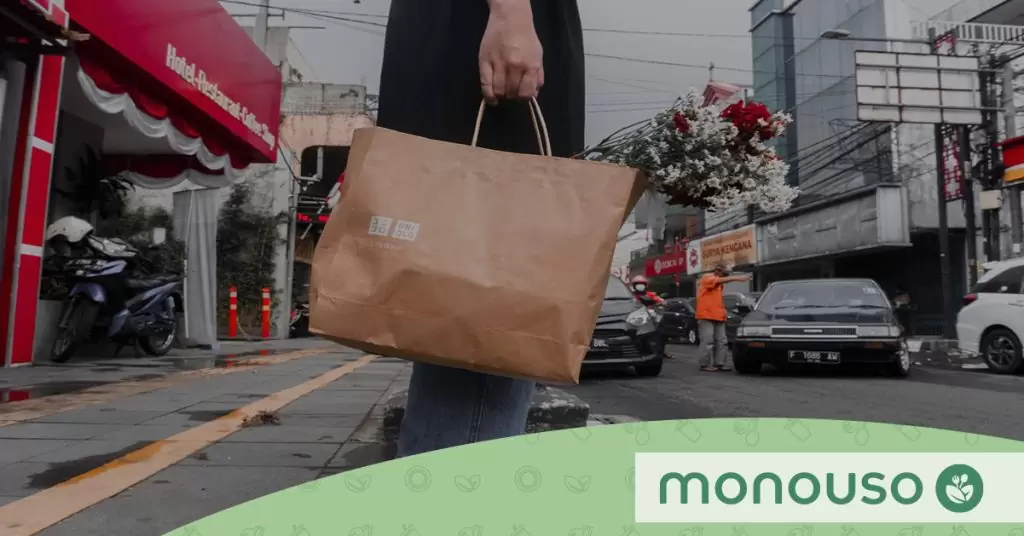
It’s no secret that packaging is a vital part of a brand’s identity. Someone walking down the street with a well-designed bag — featuring your brand’s colours and logo — becomes a walking billboard.
Your packaging should reflect your brand vision, the quality of your products, and the type of service you offer. Your logo, colour palette, and typography should all be visible and consistent on your take-away bags.
Remember that every element of your brand design sends a message — and packaging is no exception. When customising your bags, you should aim for anyone to instantly recognise what’s inside, what you offer, and how you stand out from the competition.
Don’t be too shy or too bold when expressing your brand on your take-away bags. A subtle yet clear design is ideal. With or without handles, white or brown, your bags should highlight your identity and set you apart from the rest.
What are the advantages of take-away bags for food delivery?
Their wide base provides excellent stability, especially when used with American boxes or lunch boxes. They’re also made from materials that resist heat, moisture, and weight.
What are the most recommended materials for take-away bags?
The most commonly used material is kraft paper, whether in its natural tone, bleached, or silicon-coated. It’s biodegradable, strong, and stylish. However, high-grammage traditional white paper is also used. The choice depends on the type of product being delivered.